Check out the latest USDA publication using AutoNorm for full-length 16S sequencing
READ NOW


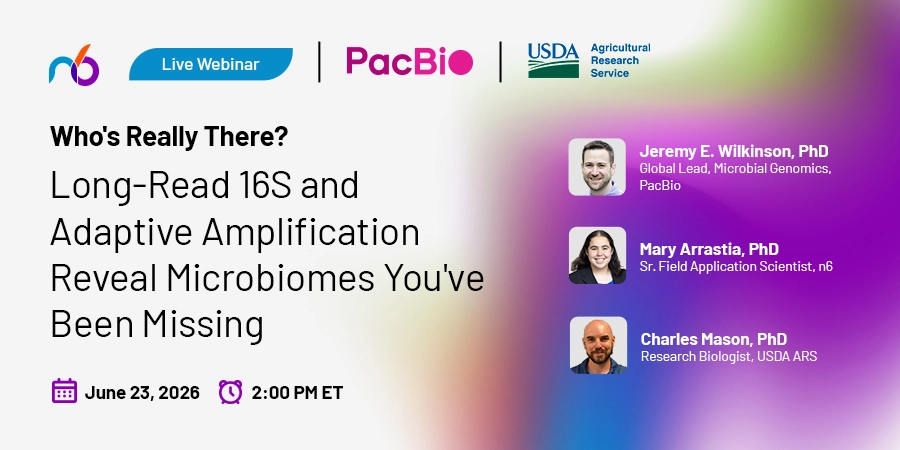
Most 16S sequencing workflows have a dirty secret: what you see in your data isn't always what's actually in your sample. Fixed-cycle PCR introduces artifacts, distorts community profiles, and amplifies noise. Short hypervariable regions leave entire taxonomic groups hiding in plain sight. The result is a microbiome that looks complete but isn't.
In this webinar, researchers from USDA ARS and scientists from PacBio and n6 share how combining full-length 16S long-read sequencing with adaptive, per-well amplification control is fundamentally changing what's discoverable in complex microbial communities. You'll see real-world data showing how autonormalized library preparation more than doubles unique ASV detection on PacBio, jumping from 24% to 59% of reads mapping to unique ASVs, while delivering balanced read counts across sample inputs spanning orders of magnitude in concentration. From insect gut microbiomes to agricultural soils, the organisms you've been missing are ready to be found.

Global Lead, Microbial Genomics, PacBio
Jeremy Wilkinson is the Microbial Genomics Global Lead at PacBio. He has a PhD in Environmental Toxicology with a focus on microbiome analysis, a MS in Zoology with a focus on mammalian phylogenetics, and a BS in Biochemistry and Molecular Biology with a minor in Microbiology. Jeremy has been at PacBio for ~5 years. Before that he was at the Harvard T.H. Chan School of Public Health for ~4 years as the Director of the Microbiome Analysis Core and a Research Scientist in the Huttenhower Lab. Prior to that he was at RTL Genomics for ~6 years and was most recently the Director of Operations and Senior Biostatistician.
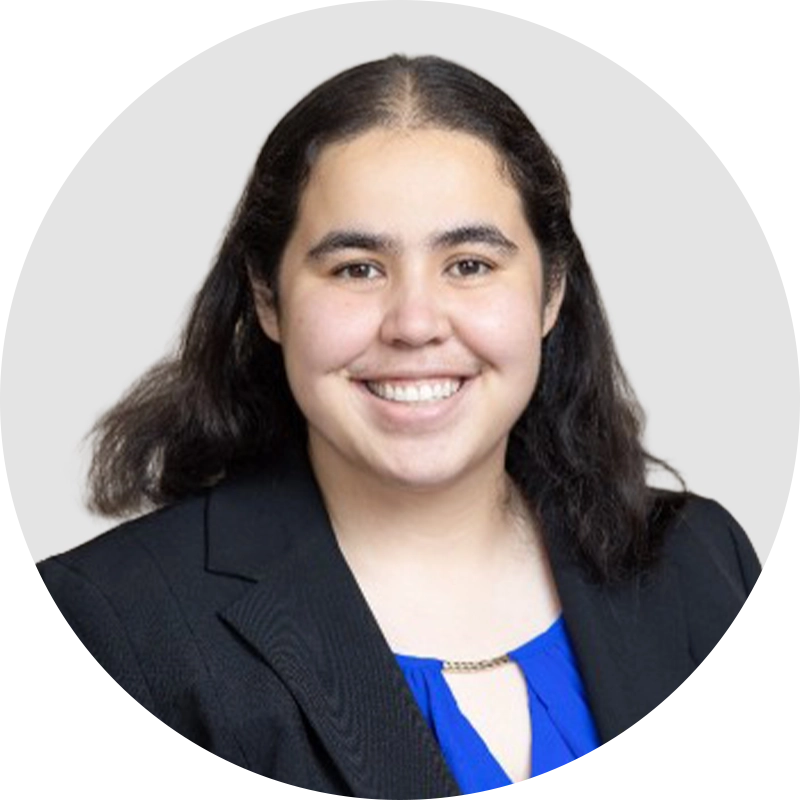
Sr. Field Application Scientist, n6
Mary Arrastia is a Senior Field Application Scientist at n6 with 10+ years of experience in genomics across academia and industry. She earned her Ph.D. from Caltech where her thesis focused on single-cell 3D genomics and completed a postdoctoral fellowship at Stanford studying chromatin architecture in immune cell lines. Prior to n6, she was a Senior Field Application Scientist at Scale Biosciences.

Research Biologist, USDA ARS
Charles Mason is a Research Biologist at the USDA ARS Daniel K. Inouye Pacific Basin Agricultural Research Center. His research focuses on multitrophic interactions between invasive insect herbivores, host plants, and gut microbiomes. Dr. Mason’s research has spanned multiple study systems, and since joining the ARS he has focused primarily on invasive tephritid fruit flies and applications of microorganisms to pest management. In support of his research, Dr. Mason has applied new and emerging molecular techniques to characterize microorganisms in his study systems to uncover new insight into host-microbe interactions.


