Check out the latest USDA publication using AutoNorm for full-length 16S sequencing
READ NOW


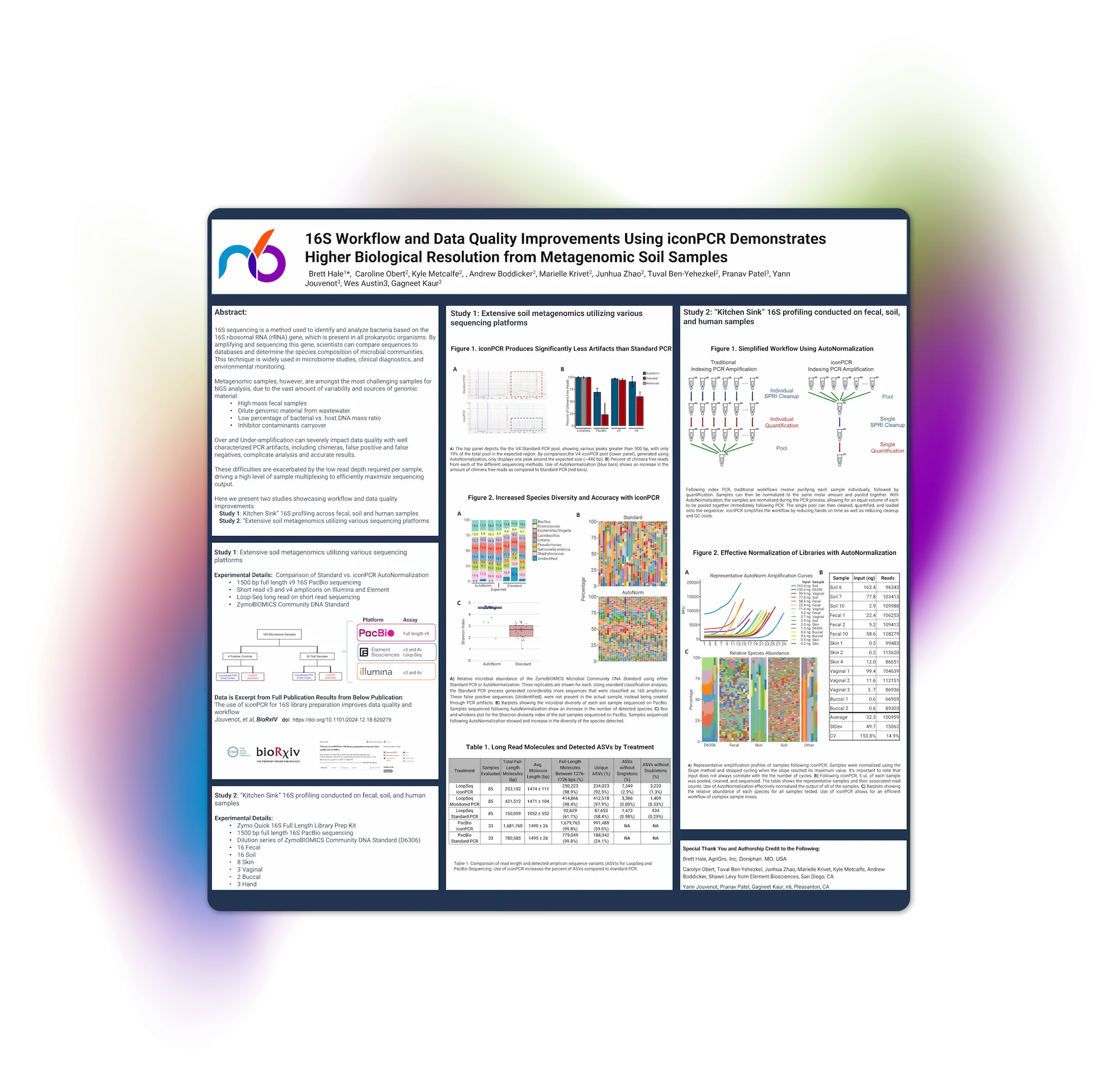
16S sequencing is a method used to identify and analyze bacteria based on the 16S ribosomal RNA (rRNA) gene, which is present in all prokaryotic organisms. By amplifying and sequencing this gene, scientists can compare sequences to databases and determine the species composition of microbial communities. This technique is widely used in microbiome studies, clinical diagnostics, and environmental monitoring.
Metagenomic samples, however, are amongst the most challenging samples for NGS analysis, due to the vast amount of variability and sources of genomic material:
Over and Under-amplification can severely impact data quality with well characterized PCR artifacts, including chimeras, false positive and false negatives, complicate analysis and accurate results. These difficulties are exacerbated by the low read depth required per sample, driving a high level of sample multiplexing to efficiently maximize sequencing output.
Here we present two studies showcasing workflow and data quality improvements:
Study 1: Kitchen Sink” 16S profiling across fecal, soil and human samples
Study 2: “Extensive soil metagenomics utilizing various sequencing platforms